Head-to-Head: Cocoon By Sealy Chill vs Siena Signature Memory Foam Mattress (Detailed Comparison)
Choosing a memory foam mattress often comes down to balancing two competing needs: the desire for that signature "hugging" sensation and the necessity of staying cool throughout the night. Memory foam is notorious for trapping body heat, which is why brands like Sealy and Residency (the parent company of Siena) have invested heavily in cooling technologies and value-driven engineering. In this detailed comparison, we look at two of the most popular mid-range memory foam options on the market: the Cocoon By Sealy Chill and the Siena Signature Memory Foam Mattress.
The Cocoon Chill is often marketed as a premium cooling solution from a legacy brand, leveraging Sealy’s decades of manufacturing experience to offer a mattress that feels cold to the touch. On the other hand, the Siena Signature is the "value" offering from the same house that produces the Nectar mattress, designed to provide high-density support and pressure relief at a price point that undercuts much of the competition. While both are all-foam beds delivered in a box, they cater to slightly different types of sleepers and prioritize different aspects of the sleep experience.
The Cocoon By Sealy Chill: Cooling Specialization
The Cocoon By Sealy Chill is a standout in the "bed-in-a-box" market precisely because it addresses the number one complaint regarding memory foam: heat retention. Sealy utilizes a Phase Change Material (PCM) cover that is designed to absorb and dissipate heat immediately upon contact. This creates a noticeable "chill" factor when you first lie down, which can be a game-changer for sleepers who struggle with night sweats or live in warmer climates.
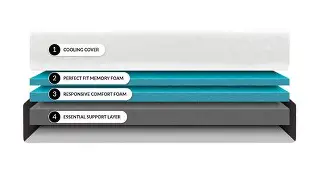
Structurally, the Chill is a multi-layer foam mattress. It typically features a comfort layer of "Perfect Fit" memory foam, which is engineered to adapt to the sleeper's unique shape, weight, and temperature. This is supported by a responsive transition foam that prevents the sleeper from sinking too deeply into the bed, and a robust base layer of high-density polyfoam that provides the necessary structural integrity. The result is a mattress that leans toward the medium-firm side of the spectrum, offering a balance of contouring and support that works well for a wide variety of sleeping positions.
One of the unique aspects of the Cocoon Chill is its availability in two different profiles: the Medium-Soft and the Extra Firm. However, the Medium-Soft version remains the most popular as it provides enough "give" for side sleepers to sink in at the shoulders and hips, while still maintaining enough resistance to keep back sleepers aligned. The cooling cover remains the primary draw, performing remarkably well even through thin cotton sheets.
Pros and Cons of the Cocoon By Sealy Chill
- Pro: Exceptional Phase Change Material cover provides an immediate cooling sensation that is rare in the all-foam category.
- Pro: Backed by Sealy’s extensive manufacturing history and quality control standards.
- Pro: Offers excellent motion isolation, making it a strong choice for couples who are easily disturbed by a partner’s movement.
- Pro: Available in multiple firmness levels to suit specific personal preferences.
- Con: The "chill" sensation can dissipate over the course of eight hours as the PCM reaches its thermal capacity.
- Con: Edge support is average for an all-foam bed, which may be a concern for those who sit on the side of the bed to get dressed.
The Siena Signature Memory Foam Mattress: The Value Powerhouse
The Siena Signature Memory Foam Mattress entered the market with a clear mission: to provide the structural benefits of a high-end memory foam bed at a fraction of the cost. While it doesn't feature the advanced phase-change covers found on the Cocoon, it relies on a well-thought-out stack of foams that prioritize support and durability. It is generally categorized as a "Firm" mattress, sitting around a 7.5 or 8 out of 10 on the firmness scale.
The Siena is constructed with five distinct layers. It starts with a breathable soft-touch cover, followed by a layer of gel-infused memory foam. The gel infusion is intended to help with temperature regulation by drawing heat away from the body, though it functions differently than the active cooling cover of the Cocoon. Below the gel foam is a layer of "ripple-cut" transition foam, which features pockets of air to facilitate breathability while providing a buffer between the soft top and the rigid base. Finally, a thick layer of foundational foam ensures the mattress doesn’t sag over time.
Because of its firmness, the Siena is particularly well-suited for back and stomach sleepers. Stomach sleepers, in particular, need a bed that prevents their hips from sinking too far into the mattress, which can lead to lower back pain. The Siena’s dense construction provides that necessary lift. For side sleepers, the Siena might feel a bit too rigid initially, though the gel memory foam does eventually contour to the body once it warms up.
Pros and Cons of the Siena Signature Memory Foam Mattress
- Pro: Incredible value-for-money, often priced significantly lower than competitors with similar foam densities.
- Pro: Firm support profile is ideal for stomach sleepers and those who prefer a "floating" feel rather than a "sinking" feel.
- Pro: The ripple-cut transition layer provides better-than-average airflow for a budget memory foam mattress.
- Pro: Minimal off-gassing compared to other value-tier foam mattresses.
- Con: May be too firm for lightweight side sleepers who need more pressure relief at the shoulders.
- Con: Lacks the "cool-to-the-touch" luxury feel provided by higher-end cooling covers.
Technical Comparison Table
To better understand how these two mattresses stack up, it is helpful to look at their technical specifications side-by-side. While both are polyester-blend covered foam beds, their internal priorities differ.
Find top-rated Electronics products at great prices.
See Deals →| Feature | Cocoon By Sealy Chill | Siena Signature Memory Foam |
|---|---|---|
| Primary Benefit | Advanced Surface Cooling | Exceptional Value & Firm Support |
| Firmness Level | Medium-Firm (6.5/10) or Extra Firm | Firm (7.5-8/10) |
| Top Layer | Phase Change Material Cover | Gel-Infused Memory Foam |
| Thickness | 10 Inches | 10 Inches |
| Construction | 3-Layer All-Foam | 5-Layer All-Foam |
| Motion Isolation | High | High |
| Best For | Hot sleepers, All positions | Back/Stomach sleepers, Budget seekers |
In-Depth Analysis: Pressure Relief and Support
When we talk about pressure relief, we are looking at how well the mattress cradles the heavier parts of the body—the shoulders, hips, and knees. The Cocoon By Sealy Chill excels here for the average sleeper. Its "Perfect Fit" foam has a slightly slower response time, meaning it allows you to sink in just enough to feel the pressure melt away without making you feel stuck. For a side sleeper weighing between 130 and 200 pounds, the Cocoon provides a very comfortable "sweet spot" of spinal alignment.
The Siena Signature takes a different approach. Because it is firmer, it doesn't offer that deep, traditional memory foam "hug." Instead, it provides a very stable surface. If you are a back sleeper, you will likely find that the Siena does a better job of keeping your spine in a neutral position because there is less dipping in the lumbar region. However, if you are a petite side sleeper, you might find that the Siena pushes back a bit too much, potentially causing some numbness in the arms during the night.
Support is also an area where weight plays a role. Heavier sleepers (over 230 pounds) generally need more support than a 10-inch all-foam mattress can provide, but if choosing between these two, the Siena’s higher firmware and denser base might hold up slightly better over time against sagging. The Cocoon is remarkably durable for its class, but its softer comfort layers are designed more for responsiveness than for heavy-duty resistance.
Temperature Regulation: Active vs. Passive Cooling
This is perhaps the most significant differentiator between the two beds. The Cocoon By Sealy Chill utilizes "active" cooling via its PCM cover. This material actually changes its physical state to manage heat. When you are hot, it absorbs heat; if you were to cool down too much, it would technically release it. In practice, this means the bed feels noticeably cold when you first get in, which helps lower your core body temperature—a key biological trigger for falling asleep faster.
The Siena uses "passive" cooling. It doesn't have a special fabric that feels cold; instead, it uses gel infusions and structural design to prevent heat from building up in the first place. Gel beads in the foam help conduct heat away from the surface, and the convoluted (egg-crate style) foam layer allows air to move through the center of the mattress. While the Siena is quite breathable for a budget foam mattress, it cannot compete with the immediate cooling effect of the Cocoon Chill.

Motion Transfer and Couples' Considerations
Both mattresses are excellent performers in terms of motion isolation. This is one of the primary benefits of an all-foam construction compared to an innerspring or hybrid model. Because there are no coils to act as springs, energy doesn't travel across the surface of the bed. If one person tosses and turns, the other is unlikely to feel it.
However, edge support is where they differ slightly. All-foam mattresses generally struggle with edge support, but the Siena Signature’s firmness gives it a slight edge here. When you sit on the corner of the Siena, the foam compresses, but the dense base provides a "floor" that prevents you from sliding off. The Cocoon, being slightly softer, has a bit more "roll-off" sensation at the very edge. This is rarely a deal-breaker for sleeping, but for seniors or those with mobility issues who use the edge of the bed for support, the Siena is marginally more stable.
Buying Guide: Which One Should You Choose?
Deciding between the Cocoon By Sealy Chill and the Siena Signature involves evaluating your sleep position, your body temperature, and your budget. Here are the key factors to consider before making your final decision:
Shop the latest Electronics picks on Amazon.
Shop Amazon →Identify Your Sleep Position
Side sleepers typically require more cushioning for their shoulders and hips. If you spend most of the night on your side, the Cocoon By Sealy Chill (in the Medium-Soft version) is the superior choice. Back and stomach sleepers require a flatter, firmer surface to prevent spinal misalignment. If you sleep on your stomach, the Siena Signature is one of the best budget options available because it provides the rigidity needed to keep the hips elevated.
Evaluate Your Core Temperature
If you frequently wake up because you are too hot, or if you find yourself kicking off the covers, the Cocoon Chill’s cooling technology is worth the extra investment. While the Siena is not a "hot" bed, it doesn't offer the cooling "relief" that the Cocoon provides. Sleepers in poorly ventilated rooms or humid climates will likely find the Cocoon much more comfortable.
Consider Your Budget
The Siena Signature is almost always the more affordable option. It is positioned as a high-quality "entry-level" memory foam mattress. If you are furnishing a guest room, a dorm, or are simply on a tight budget, the Siena offers a level of build quality that far exceeds its price point. The Cocoon is a mid-range mattress; while it is often on sale, it represents a larger financial commitment in exchange for branded technology and legacy reliability.
Factor in Body Weight
Lightweight sleepers (under 130 lbs) will find the Siena very firm—perhaps too firm to be comfortable. They will likely prefer the Cocoon’s more adaptive foam. Average weight sleepers (130-230 lbs) will find both beds suitable, depending on their firmness preference. Heavier sleepers might find both beds lack the deep support of a hybrid, but the Siena’s firmness will prevent the "bottoming out" sensation better than the Cocoon.
Conclusion
The Cocoon By Sealy Chill and the Siena Signature Memory Foam Mattress are both exceptional examples of modern mattress engineering, but they serve different masters. The Cocoon is a specialized tool designed to solve the problem of sleeping hot. It offers a luxurious, cool-to-the-touch sensation and a balanced medium-firm feel that caters to a broad audience, particularly side and back sleepers who appreciate a brand with a long-standing reputation like Sealy.
The Siena Signature is a structural powerhouse that brings firmness and durability to the budget category. It is the ideal choice for those who dislike the "quicksand" feeling of traditional memory foam and instead prefer a solid, supportive surface that facilitates easy movement and keeps the spine straight. While it lacks the advanced cooling textiles of the Cocoon, its breathable design ensures it remains a viable option for most sleepers.
Ultimately, if your primary goal is temperature regulation and a softer, more adaptive feel, the Cocoon By Sealy Chill is the winner. If your priority is maximum support for the lowest possible price, the Siena Signature stands as a highly competitive alternative. Both mattresses effectively eliminate motion transfer and provide the pressure relief that memory foam is famous for, ensuring a significant upgrade over an aging innerspring mattress.