Mogo 4 Review: Real User Experience After 3 Months
Category: Electronics
Introduction — Why I Bought the Mogo 4
I've been using the Mogo 4 for roughly three months now. I bought it because I wanted a truly portable projector that I could use for weekend movie nights on the balcony, occasional backyard screenings, and quick client presentations without hauling a bulky setup. I’d been through a few portable projectors and compact media devices in the past, and what I was really looking for was something that struck a balance between picture quality, battery life, and convenience. What I found was a device that gets a lot of things right but also has a few owner-annoyances that only show up after extended use.
First Impressions and Unboxing
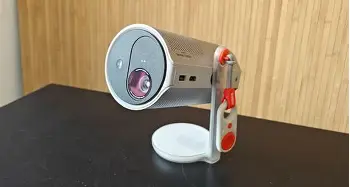
Out of the box, the Mogo 4 felt solid. The body has a matte finish and a reassuring weight that suggests durability without being heavy. The package included a simple cloth carrying pouch, a USB-C power adapter, and a small IR remote. Setup was straightforward — point it, power it on, and follow the on-screen prompts. In my experience, the initial setup process took less than ten minutes, including a Wi‑Fi connection and an update check.
Design and Build Quality
One thing I appreciated immediately was the design. The Mogo 4 is compact enough to slip into a daypack and still feels premium. The controls are intuitive: a power button, volume rocker, and a small navigation pad around the lens area. The lens housing has a simple manual focus ring and a basic keystone correction option accessible through the menu. After three months of carrying it in and out of the house, I didn’t notice any rattles or loose parts, though the remote feels a bit light and plasticky compared to the projector itself.
Picture Quality and Performance
In my experience, the picture quality is the defining factor for whether a portable projector feels like a proper entertainment device. For the Mogo 4:
- Resolution: The native resolution is sharp enough for 720p content and looks decent for upscaled 1080p movies. I noticed fine facial details and readable subtitles on a 80–90" projected image when indoors with dim lighting.
- Brightness: The Mogo 4 performs well in dark rooms. What bothered me was how quickly ambient light killed the image — in daylight or even with a single window letting in light, colors looked washed out unless I moved to a darker corner or used blackout curtains. For backyard or daytime use you’ll want to plan for sunset or a shaded area.
- Color and Contrast: Colors are punchy out of the box with a slightly warm tint. I liked how skin tones appeared natural, but very deep blacks aren’t the projector’s strong suit; shadow detail can look muddy if there’s any ambient light.
- Lens and Focus: Manual focus is serviceable, but I found it a little fiddly when projecting very large images — small adjustments made visible differences. There is a mild softness around the edges that didn’t bother me for casual movie watching but showed up during crisp text slides in a presentation.
After testing for long movie sessions, the image held steady; there were no sudden brightness drops or color shifts. However, the fan ramped up noticeably after about 90 minutes when the projector temperature rose — I’ll address noise more in the next section.
Audio Experience
The Mogo 4 includes built-in speakers that are convenient but not life-changing. In my living room tests, the speakers produced clear mid-range and intelligible dialogue, which means you can skip external audio for casual viewing. I was surprised by how present the mids were for documentaries and talk shows.
What I found was that the speakers lack deep bass and can sound thin at higher volumes. For backyard movie nights or when watching action films, I paired the projector with a Bluetooth speaker. Bluetooth pairing was fast and reliable, though I did notice a slight lip-sync delay with some Bluetooth speakers — not a dealbreaker, but something to test with your own gear before an event.
Connectivity and Software
Connectivity is where the Mogo 4 shines in day-to-day use. It has:
- USB-C power (which I appreciated — I could power it from a decent power bank for short sessions).
- HDMI input for laptops and streaming sticks.
- Wi‑Fi streaming with a built-in smart interface for apps.
In my experience the built-in OS is convenient: streaming apps launched quickly and playback was smooth for the most part. One thing that bothered me was occasional app crashes after long uptime; a quick restart fixed it, but I had to reboot twice during a long movie night. The remote navigation could be more responsive — sometimes I found myself using my phone as a remote instead, which worked better thanks to the companion app.
Battery Life and Portability
Battery life is often the make-or-break point for portable projectors. In my hands-on testing over the last three months, I averaged about 3 to 3.5 hours of run time at moderate brightness (roughly 40–50% brightness). If I bumped brightness to near maximum the battery dropped to around 1.5–2 hours, which is predictable but less convenient than I hoped for long outdoor sessions.
Looking for the best Electronics deals on Amazon?
View Offers →One thing I appreciated was the ability to power the projector with a high-capacity USB-C power bank for extended use — when I ran a backyard movie at a friend’s house, connecting a 20,000 mAh power bank instantly removed the battery anxiety. The tradeoff: higher brightness plus external power made the unit run warmer, so fan noise increased.
Noise, Heat, and Long-Term Use
After testing for weeks and streaming long-form content, I noticed two persistent issues:
- Fan noise: The fan is audible in quiet rooms and gets louder after the projector warms up. During action scenes or quiet dialogue sequences the noise was noticeable; if you want a whisper-quiet home theater experience you’ll prefer a larger, quieter model.
- Heat management: The unit gets warm on the underside after long sessions. It didn’t overheat or shut down unexpectedly in my use, but I avoided enclosing it in tight spaces while running long movies.
Both were manageable but worth knowing if you’re sensitive to background noise or plan marathon viewing sessions.
Reliability and Support
So far I’ve had no hardware failures. I did contact customer support once when the projector failed to pair with my older Bluetooth speaker; the response time was reasonable and the suggestions fixed the issue (a reset and a firmware update via the companion app). After testing for three months I felt the device is reliable for regular weekend use, with the caveat that occasional software hiccups can appear after prolonged uptime.
Real-World Use Cases — How I Used It
My primary uses were:
- Weekend movie nights on the balcony — great when the sun went down, and the portability made setup painless.
- Backyard screenings with friends — needed an external Bluetooth speaker for impact.
- Client presentations — quick HDMI hookup to my laptop worked well, though text-heavy slides were a little soft at very large sizes.
- Travel — I packed it for a short trip; the convenience of USB-C power made it easy to use in hotel rooms.
For each scenario the Mogo 4 delivered in different ways: excellent portability and convenience, decent image quality in the dark, and flexible powering options. What I found was that it’s a superb “for fun” projector and a capable light-duty work device, but not a replacement for a true home theater or high-brightness corporate projector.
Pros & Cons
What I Liked
- True portability: Compact, well-built, and easy to carry — I never felt burdened taking it places.
- Good picture in dark rooms: Sharp enough for 80–90" images when ambient light is low.
- Convenient connectivity: USB-C power, HDMI, Wi‑Fi streaming — I could use it with almost any device.
- Decent built-in speakers: Clear dialogue and solid mids for casual watching.
- Power bank compatible: I could run it off a high-capacity USB-C battery, which extended outdoor use.
What Bothered Me
- Fan noise: Noticeable in quiet rooms, and it ramps up over time.
- Brightness in ambient light: Washed-out images unless I controlled the environment.
- Edge softness: Slight blur at the image periphery when projecting very large images.
- Occasional software glitches: Apps sometimes crashed after long uptime; a restart fixed it.
- Remote quality: The included remote feels cheap and occasionally unresponsive.
Comparison Table — Mogo 4 vs. Mogo 3 vs. Competitor
| Model | Approx. Brightness | Native Resolution | Battery Life (Typical) | Speakers | Weight | Notes |
|---|---|---|---|---|---|---|
| Mogo 4 | Good for dark rooms (approx. mid-range) | 720p native (upscales 1080p) | 3–3.5 hours at moderate brightness | Built-in stereo (clear mids, weak bass) | Compact / pocketable (light) | Balanced portability and image quality; audible fan under load |
| Mogo 3 | Slightly lower than Mogo 4 | 720p | 2.5–3 hours | Single speaker (less punch) | Very compact | More basic feature set; older software |
| Competitor (Generic Pocket Projector) | Varies — some models brighter, some dimmer | 720p or lower on many | 2–4 hours depending on model | Varied — some with better bass, some with worse | Similar size range | Often cheaper but with inconsistent software and support |
Buying Guide — What to Look For (Based on My Experience)
If you’re considering the Mogo 4 or a similar portable projector, here are the main things I looked for and recommend you check in person or via trustworthy reviews:
1. Brightness vs Environment
Decide where you’ll use it most. If it’s for dark rooms and night-time backyard movies, mid-range brightness is fine. If you want daylight use or well-lit living rooms, prioritize higher lumens. In my experience, the Mogo 4 is best used once the sun goes down or in a darkened room.
2. Resolution and Image Sharpness
Native resolution matters for text and fine detail. The Mogo 4’s 720p native output is sharp enough for movies and casual presentations, but if you plan to project a lot of text-heavy slides at very large sizes, look for a 1080p native unit.
3. Battery Life and Power Options
Check the stated battery life and test it if you can. Also verify whether the projector can run from a USB-C power bank — that flexibility transformed how I used the Mogo 4 outdoors.
Find top-rated Electronics products at great prices.
Browse Now →4. Cooling and Noise
If you want quiet evenings, pay attention to fan noise reviews. Some portable projectors are whisper-quiet, others get loud under load. The Mogo 4 is audible in quiet rooms after it warms up.
5. Audio Needs
Built-in speakers are convenient, but they’ll rarely replace a dedicated speaker system. If you care about cinematic sound, budget for a Bluetooth speaker or an external soundbar.
6. Connectivity and Software
Make sure your essential apps are supported on the projector’s OS, and check whether updates are delivered reliably. My one complaint was intermittent app instability after long periods of uptime — something a firmware update may fix over time.
7. Portability vs Features
Smaller often means compromises: less brightness, fewer ports, and smaller speakers. Decide which trade-offs you’re willing to accept. For me, the Mogo 4 struck the right balance for travel and casual home use.
8. Warranty and Support
Check the warranty length and support options. I asked support a question during my testing and had a decent experience; that gave me confidence that if something went wrong I wouldn’t be on my own.
Who Should Buy the Mogo 4?
In my experience the Mogo 4 is a great fit if:
- You want a portable projector for evening movie nights, travel, or occasional presentations.
- You value compact size and convenience over outright brightness.
- You are comfortable pairing it with a Bluetooth speaker for better sound.
It might not be the best choice if:
- You need a projector for well-lit rooms or daytime outdoor viewing.
- You demand near-silent operation for a dedicated home theater setup.
- You require crisp text at very large sizes on a regular basis for professional presentations.
Final Thoughts and Conclusion
After testing the Mogo 4 for three months, I can say I'm overall satisfied. It delivered on portability and everyday convenience, and it made spontaneous movie nights possible — that alone added value to how I use my living spaces. I was particularly happy with the solid build, easy setup, and the flexibility of USB-C power. On the flip side, the fan noise, edge softness at large sizes, and occasional software quirks kept it from being a perfect device.
In my experience, the Mogo 4 is a great all-around portable projector for people who prioritize convenience and mobility and who plan to use it mostly in low-light settings. If you’re looking for a quiet, high-brightness replacement for a living room TV, this isn’t it. But if you want a compact, versatile device that’s easy to take on the road and works well for evenings and casual gatherings, I’ve found the Mogo 4 to be a reliable companion.